Be yourself; Everyone else is already taken.
— Oscar Wilde.
This is the first post on my new blog. I’m just getting this new blog going, so stay tuned for more. Subscribe below to get notified when I post new updates.
Be yourself; Everyone else is already taken.
— Oscar Wilde.
This is the first post on my new blog. I’m just getting this new blog going, so stay tuned for more. Subscribe below to get notified when I post new updates.
Toculizumab is a monoclonal antibody drug used to treat specific types of arthritis. Monoclonal antibodies are a specific type of man-made antibody used to fight disorders that typically target the immune system. When the immune system responds to an antigen, a dendritic cell will engulf and break apart the antigen into different peptide fragments and display these as the first signal of activation to an immature naive B cell. This means that multiple different B cells will respond since each B cell receptor can only recognize one specific epitope. Therefore, there are a few different antibodies with different epitope binding regions that can be created. This poses problems for research and treatment with antibody-based drugs because the antiserum produced will need to change per epitope and therefore isn’t standardized. Monoclonal antibodies work by fusing two types of cells together and selecting and cloning one type of resulting antibody. In the lab, the B cells that result after introducing an antigen are pulled from the body and fused with myeloma cells. The B cells have a variety of different epitopes and the myeloma cells are susceptible to aminopterin and proliferate indefinitely. When the two are fused together on an aminopterin medium, all but the cells that are fused together die off, leaving behind cells called hybridomas. These cells contain the ability to make one type of antibody while multiplying indefinitely. The most effective hybridoma is then selected and the resulting antibodies are harvested and used to treat disorders.
Toculizumab is a drug that relieves the symptoms of moderate to severe rheumatoid arthritis in adults as well as polyarticular juvenile idiopathic arthritis and systemic juvenile idiopathic arthritis. The drugs can be administered intravenously or subcutaneously. Rheumatoid arthritis is an autoimmune disease in which the cells of the immune system attack the synovial cells of the joints. These cells constitute the lining of the membranes of the joints, so when IL-6 acts on the cells inflammation occurs and can destroy the joints. As the disease progresses without treatment, the joint becomes misaligned and loses its shape due to the stretching of tendons and ligaments. Toculizumab reduces inflammation in the joints and helps to stop the breakdown, resulting in less pain and swelling. Interleukin-6 is released by the immune system to promote inflammation and is also produced by synovial and endothelial cells which is why it is a major cause of the damage done by rheumatoid arthritis. Toculizumab therefore binds to the IL-6 receptors and inhibits the signaling of these cytokines leading to the reduction of inflammation.
Toculizumab, although very helpful in reducing the symptoms of arthritis, can have major side effects. The most common side effects include:
Because the drug acts on the immune system, it causes the patient to lack appropriate response to specific infections. Therefore people need to be tested for infections prior to beginning injections of Toculizumab, including tuberculosis, fungal infections and infections due to other opportunistic pathogens. Once a person begins taking Toculizumab, they become more susceptible to opportunistic pathogens and other infections due to the fact that the drug acts directly on the immune system. The drug acts directly on IL-6 receptors to decrease the amount of IL-6 in the body which can have systemic effects because IL-6 not only causes inflammation but is also show to be involved in “T-cell activation, induction of immunoglobulin secretion, initiation of hepatic acute phase protein synthesis, and stimulation of hematopoietic precursor cell proliferation and differentiation”. The fact that there is a disruption in all of these processes means that the body can’t fight pathogens as effectively and people can be left immunocompromised.
SARS-CoV-2, also known as COVID-19, is the novel coronavirus that has been wreaking havoc worldwide. The virus is a zoonotic, enveloped RNA virus from the Betacoronavirus family. In order to understand the antibody response to the virus, we first need to understand the structure of the pathogen because that highly influences the way in which it affects the body’s immune response. The virus has a S spike protein that contains the receptor binding domain which binds to ACE2 – the virus receptor. The virus has a nucleocapsid protein N which helps to attach the virus’s RNA to a replicase-transcriptase complex and then package the resulting genome. The envelope protein on the membrane helps with assembly and release of the virus as well as ion transport. The membrane protein allows for the virus to have two different conformations and bind to nucleocapsid. The hemagglutinin-esterase dimer protein helps the virus with protein-mediated cell entry which allows the virus spread through the respiratory mucosa.
When the body recognizes a foreign pathogen, the body responds by activating the innate immune system. Naive B cells bind to the antigen using their B cell receptor, then bring the antigen into the cell and break it down into its peptide fragments. These fragments are then presented on MHC class II molecules on the membrane of the B cell. If these fragments are recognized by the T helper cells the T cell receptor binds to the antigen fragment and activates the B cell. Once the B cell is activated, it can begin proliferating and some can differentiate into antibody-secreting plasma cells. Initially, all of these plasma cells will be secreting IgM but when the T helper cells induce activation in the B cells, they release cytokines that allow the B cells to class switch, meaning that their genetic codes change in order to produce different types of antibodies. Thus, at the onset of a disease, we expect to see mostly IgM antibodies, but as the disease progresses, we expect to see other classes such as IgG or IgA. In one study, we saw that COVID-19 patients seemed to peak with IgM production at day 9 but by week 2, they switched to mostly IgG production. IgG typically is known to control infection of body tissues and activates the classical pathway of the complement system. Thus we can see that clinically, when the IgG levels are measured in an individual they can show the immune status of that person.
Based on the way the virus proliferates there are currently a few different tests to see if a person is positive for SARS-CoV-2, including gene tests and immunoglobulin detection based tests. The gene based tests use a swab kit to take a sample of secretions from the nose and then use specific reagents to lyse the virus and test it for the RNA sequence of COVID-19. Yet with this test, we can’t tell if the person is immune from past infections or is still in danger. The immunoglobulin detection based tests work based on the idea that the IgG antibody will replace the IgM antibody as the predominant serum antibody to fight the disease. Serum (the liquid part of clotted blood) is taken from a patient and the serum is put into contact with SARS-CoV-2 antigen. The IgM and IgG antibodies in the serum will form complexes with the antigen in the test if they are the ones made in response to the virus in the body. This test will show 4 possible results, negative if the antibodies in the serum are not responsive to the COVID-19 antigen, and 3 possible positive cases – IgM only positive, IgG only positive and IgM and IgG positive. These tests though do not confirm whether the virus is currently infecting you, only if you have had past exposure.
T cell and dendritic cell therapy are both ways in which the medical world is expanding our understanding of what medicine is and how to treat diseases for which antibacterials and other similar medicines are ineffective. One of the more researched and effective forms of this therapy is called Chimeric Antigen Receptor (CAR) T-cell therapy. This therapy type, according to the Dana-Farber Cancer Institute, collects T cells from the blood of a patient and adds CAR’s onto their surface. These cells are then infused back into the patient and the cells are able to use their new receptors to bind to tumors and kill them.
The therapy works because chimeric antigen receptors are unique in that they are designed for a specific tumor, meaning that when the T cells are removed from the body and programmed to express these CAR’s they are then able to attack the foreign tumor with more accuracy. According to the literature, this type of therapy has been shown to be effective for people with hematopoietic malignancies. Hematopoietic malignancies are cancers that form from mutations in the hematopoietic stem cells of the bone marrow, meaning that the resulting cancer will be either lymphoblastic (cancer of T or B lymphocytes) or myelogenous (cancer of red blood cells, platelets or granulocytes). Non-hodgkin’s lymphoma (NHL) is a cancer that arises from malignancies (most often) in B cells. The disease is classified by the presence of cancerous lymphocytes in the lymph nodes, which can spread to other organs, most commonly the lymphatic system vessels such as the spleen, thymus, tonsils and bone marrow. When someone who has NHL is diagnosed, they are given several treatment options depending on the severity of the disease, including chemotherapy, radiation, bone marrow transplants and CAR T cell therapy.
When a patient elects to do CAR T cell therapy, they have their own T cells taken. They are then grafted with CAR’s for their specific cancer and put back in the body so that they can attack, but there are some potentially dangerous side effects of this therapy. Cytokine release syndrome (CRS) and neurotoxicity are the most common toxicities that can be caused. CRS occurs when cytokines and tumor necrosis factor are released from CAR T cells (and other immune cells), causing a dangerous inflammatory response. These effects can be mitigated by watching patients closely and administering IL-6 blockers when the CRS score becomes too high – as IL-6 is thought to be important to the CRS inflammatory response. The price of even just one transfusion can be more than $350,000 and insurance may not cover even half of it. If the treatment was cheaper it would allow more people access to the potentially life-saving benefits.
This pandemic has felt very surreal so far. It’s as if we’re in the beginning of a dystopian novel and nothing feels quite real. I had known before spring break that the coronavirus was becoming a large issue in the US but I had no idea that it would escalate so quickly. Although spring break now feels like years ago, it was also what feels like the beginning of the end. I’m a nursing assistant at the hospital and I worked 5 night shifts in a row at the beginning of break and then for the second half I flew to Tuscaloosa, Alabama to visit with some friends. I got word that classes would be online right before I boarded my flight to Bama and I was upset. I’m graduating in December but most of my friends are graduating this spring and so all of the big end of the year plans we had have vanished.
I’m someone who really values time with my friends and this abrupt stop to the school year is something that I wasn’t at all prepared for and I’m still mourning the time lost with my friends before we scatter around the country for jobs or other schooling. When I got back from break I applied to stay on campus in my dorm so that I could continue to work at the hospital and help out during this time of crisis, but they denied my request and so I’ve been forced to move home. I love my job so much and was beyond thankful when my managers were understanding and will be allowing me to come back to my job when my lease for summer housing begins. I miss my job and my friends so much even though I completely understand that it’s a necessity to have social distancing and no physical contact with others.
Being home has been a struggle, as I don’t focus well in places that aren’t bustling and loud like coffee shops. My family also just moved to a new house right as I was moving out of my dorm, so we haven’t had furniture and were unfamiliar with the new area and I’ve been trying to help set up a new home between all of my assignments. So everything is changing and it’s been difficult to focus, but we’re all doing our best. I have been talking with my friends over facetime daily and we have been watching movies and playing games together. I’m grateful we live in an age where we can have face-to-face contact with people. My sister also goes to UNC so we’ve been doing our classes together and it’s been nice to have someone to hang out with and plan stuff to look forward to each day. Although it’s been hard not leaving home we have all been respecting the quarantine and only leaving to go to the grocery store because not becoming a carrier and infecting others is all of our main priorities. It’s been a tough time but we will get through this and get this virus under control. I’m looking forward to when we can go back to life as normal and not have to worry about our loved ones getting sick!
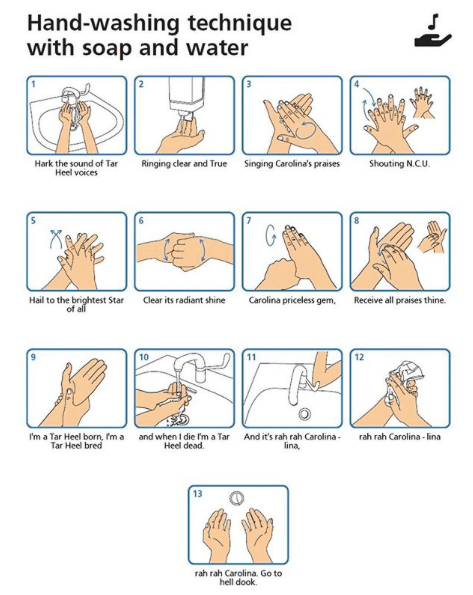
Antibiotic resistant organisms are becoming a larger problem for the world. The CDC has created a way to measure the threat of specific bacteria that are resistant to antibiotics. The scale consists of 3 different threat levels, concerning, serious and urgent. With more and more superbugs occuring, the CDC is trying to keep everyone informed of the largest threats to our global community. Antibiotic resistant strains of bacteria are formed when bacteria susceptible to antibiotics are wiped out but the ones with resistance remain behind and continue to be transmitted. The bacteria are able to become resistant if they acquire specific genes through conjugation that allow them to change in a way that helps them to be overseen by the antimicrobials.
Recently there was a study done to try to further understand the resistant nature of Staphylococcus epidermidis. S. epidermidis is generally found on the human skin but can also colonize things like milk, dust, and soil. It is a Gram-positive, non-spore forming, nonmotile, facultative anaerobic bacteria that can cause many different types of infections if it enters broken skin. Many times the resistant strains of the pathogen are found on patients in hospitals, but this study found that the bacteria are also found on healthy people in the general population and in pasteurized milk. I think the fact that the bacteria are being found outside of the healthcare setting and are being transmitted within the population poses a large problem when trying to combat the pathogens with medicine. The more a resistant pathogen enters and circulates in society, the more dangerous it becomes. With more superbugs and resistant microbes in the world people are more likely to be harmed by previously treatable diseases.
In another recent study, researchers looked at the way that waterways are a major route of transfer for many antimicrobial resistant bacteria. The resistant pathogens find their way into the waterways of mainly urban areas by wastewater discharge or run-off from manure and biosolids. Since the spread of these pathogens in the water creates a problem for the whole population, the water has to be treated with “UV irradiation, chemical advanced oxidation processes, and bioelectrochemical systems”. By treating the water in an attempt to kill the bacteria, we are able to stop the pathogens from reaching most homes. Overall, we are discovering new strains of bacteria resistant to antibiotics everyday and are desperately trying to stop their spread to the general public.
Vaccines have become the number one prevention method against diseases. Vaccines are either attenuated or inactivated. Attenuated vaccines are categorized as such due to their ability to replicate in the host because they are created with a weakened form of the pathogen. Since the vaccine is created from the actual pathogenic microbes it causes a real immune response to the mild disease it causes, resulting in immunity against future strains of the disease that try and infect the vaccine recipient. Inactivated vaccines are still able to create immunity despite the fact that they can’t replicate. These vaccines are generally weaker because they are unable to actually amplify the initial dose, so although it’s good that they are unable to actually become pathogenic, many times boosters are required.
Polio is an example of a disease that has been nearly eradicated due to the use of vaccines. Polio can be caused by serotypes 1, 2 and 3 of the poliovirus – a single-stranded, non-enveloped, RNA virus. In about 1% of the cases, polio could result in paralysis, especially if acquired young. Two vaccines were created in order to attempt to stop the spread of the disease – IPV or Inactivated Polio Vaccine and OPV or Oral Polio Vaccine. IPV and OPV are a good example of how attenuated and inactivated vaccines differ in their functions. IPV was created using all 3 serotypes of the disease and it successfully lowered the disease rate, but it required a series of vaccinations and didn’t have a high secretory IgA response. Secretory IgA (SIgA) response is important because SIgA blocks pathogens from binding to epithelial recpetors and then traps them and helps to remove them from the body through actions like coughing, sneezing and a runny nose. But the OPV was created using an attenuated version of the disease which resulted in better SIgA response. This meant that the OPV could stop the virus before it even attached to the epithelial cells, resulting in the complete stop of the spread of the disease and therefore better herd immunity. The only problem now was the fact that the OPV could possibly become pathogenic, making it more dangerous to use. But since IPV doesn’t stop the spread of the pathogen to feces (as the disease is acquired through the fecal-oral route), it can’t be used solely. So a combination of the two vaccines have been used to eradicate polio. In the US, children were first given IPV for immunity then given OPV as a booster and for SIgA response ability, until the disease was considered eradicated and OPV use was discontinued.
As of October 2019, according to the World Health Organization serotypes 2 and 3 had been globally eradicated. In order for a strain to be considered eradicated, it must go undetected for 3 years. The only problem is that recently there have been vaccine-derived poliovirus type 2 infections that have surfaced in the Philippines. This type of infection occurs due to the circulation and mutation of the excreted virus from people who have not been given a complete series of the vaccination or have been inadequately vaccinated. Since type 2 had been deemed eradicated in 2015, the vaccine in the Philippines changed over to a OPV that only contained serotypes 1 and 3, leaving the population susceptible to the vaccine-derived type 2 poliovirus. The Philippines have been given a huge shipment of vaccines that contained just type 2. A series of factors have influenced the possible re-emergence of this eradicated disease – a decreased trust of vaccinations, “inadequate delivery at the community level, too few primary care immunisation sessions, and difficulties in accessing hard-to-reach areas in the archipelago”. All of these together have harmed the health of the people of the Philippines and is a trend that can also be tracked in many other places. I think that this case in the Philippines has proved that even if we think a disease is completely gone, we can never be too careful and should always take extra precautions against infection.
.
The microbiome consists of all the microorganisms that live within specific environments within the human body. The microbiota is responsible for much of our immunity and protection against disease causing bacteria. Additionally it helps us to digest our food and it produces specific vitamins that our body can’t otherwise make such as some vitamin B’s and vitamin K. The mechanisms through which the microbiota accomplishes this and other essential tasks is still being researched. The current research on the microbiome is heavily focusing on the way in which the microbiome is connected to health and disease progression which could possibly lead to a more specialized route of treatment or prevention of different illnesses. Within the last 6 months some researchers have made a lot of progress in this area and there is a lot of evidence supporting the fact that the gut microbiome controls much more than just what happens in the GI tract.
Recently, Sibo Zhu, Yanfeng Jiang and Kelin Xu published an article entitled “The progress of gut microbiome research related to brain disorders” which spoke about the way in which gut microbiota affects cognitive function as well as the connection to the progress of neurodegenerative and cerebrovascular diseases. Focusing a lot on the way in which the blood brain barrier (BBB) is affected by the actions of the gut microbiota which in turn affects the way in which diseases that target the brain and nervous system can process in the body. Still the exact way in which the microbiota affects the blood brain barrier is unknown, but the researchers believe that it could be regulated by gut derived neurotransmitters or bacteria metabolites. There is evidence though that the barrier becomes increasingly permeable when there is less healthy gut microbiota and the BBB is restored to its normal permeability when there is no longer a disease in the body. This fact is vital to understanding the mechanisms through which disease is transmitted in the body as well as the way that the microbiome is intertwined with other systems. To focus on one disease of the many that the researchers covered, amyotrophic lateral sclerosis (ALS) is a fatal neurodegenerative disorder. Gut dysbiosis was found in many of the patients with ALS, specifically there was a significantly decreased amount of butyrate, yet when diseased mice were given water infused with butyrate, the severity of their symptoms decreased and their survival rate increased. This is evidence that by affecting the microbiome, there is a direct effect on disease progression and severity.
“Celiac’s Disease and the Microbiome” by Francesco Valitutti, Salvadore Cucchira and Alessio Fasano is another article that details the way in which the gut microbiota affects the disease progression. Celiac’s disease (CD) is an immune reaction to eating gluten so a lot of the bacterial microorganisms are involved in the disease’s pathogenesis. The researchers point out that diet and form of delivery at birth both heavily impact the way in which the microbiota forms and thus how CD affects the body. Children born via C-section do not get coated in the bacteria from the vaginal canal which is supposed to help the child form a healthy microbiome of their own and so without this, there is evidence that these people have an increased risk for developing CD. The researchers then delve into the ability that working with the microbiota has to enhance the treatment and prevention of the disease. A couple studies have shown that the Bifidobacteria microbiota component can “degrade proinflammatory gluten peptides in the small intestine, thus reducing their immunogenic potential”. So if it’s possible to give therapies that work with enhancing the microbiota components to decrease the immune response to gluten and break it down so that there is less of a response.
Influenza is a very contagious virus that is susceptible to genetic variation. This makes flu season around the world dangerous since different strains appear and can easily infect the population. There are 3 types of influenza that affect humans, A, B and C. Influenza A is the type that is generally discussed when talking about epidemics and the most serious cases of the disease commonly come from this virus strain. Type B is essentially a milder version of type A and Type C is the most mild. The differences between these 3 types is the protein coat associated with the virus. Influenza is an enveloped single-stranded RNA virus with specific glycoprotein spikes on the envelope. The two types of spikes are either a hemagglutinin antigen (HA) or a neuraminidase antigen (NA). These antigens are what give each virus it’s pathogenesis and allows for it’s detection. Each variation is given a name (ie H1, H2, H3, N1, N2 etc) but of the 18 HA and 11 NA types we have found, only the aforementioned exampled 5 antigens can be passed between humans. Generally, the FDA’s Vaccines and Related Biological Products Advisory Committee (VRBPAC) tries to match the flu shot with the strains they believe will be circulating most in the country. The vaccine only targets the HA spikes on the envelope of the virus. For the 2019-2020 flu season, the CDC believed that there were 4 main strains of the virus that would be most prevalent within the population.
In this season’s influenza vaccine, there is the A/Brisbane/02/2018 (H1N1)pdm09 component, the A/Kansas/14/2017 (H3N2) component, the B/Victoria V1A.1 and B/Phuket/3073/2013 (from the B/Yamagata lineage) virus components. This resulted in a quadrivalent, cell-grown vaccine for the season. The A components are the ones that have changed from last season and the B components are those that have stayed the same in the vaccine. As stated earlier, influenza is highly susceptible to variation which is why there are changes each year with the vaccine. The influenza virus can antigenically shift or drift. Antigenic drift refers to small genetic changes in the virus’s RNA code which leads to the differences seen in the HA and NA on the envelope. Antigenic shift refers to the way in which some parts of the RNA code of animal influenza can be taken into the human body and combined with our existing influenza strains, creating a new strain of the virus. This can only happen with influenza A and can be devastating and cause pandemics. This type of change is unpredictable and thus vaccines generally do not contain the strain leading to a lack of societal immunity. The CDC cautions that the the vaccine for the flu is only usually about 40% effective, but partial immunity is better than none and can result in a decreased severity of the flu if contracted.
The CDC gathers weekly influenza surveillance data which keeps the public informed of the results of the disease in society. From October 1, 2019 to February 1, 2020 there have been an average of 26.5 million illnesses, 12.5 million medical visits, 290 thousand hospitalizations and 21 thousand deaths. The difficulty this season is that there is a mismatch in the strains that were chosen for the vaccine and those that are circulating. As mentioned, Influenza A generally causes more severe cases of the flu and is the prevalent virus seen in society. Yet this year there was evidence an influenza B strain was called the B/Victoria V1A.3 was spreading more than the influenza A strains early on in the flu season. The fact that a strain of influenza B (not in the vaccine) is more common this season poses many risks for our population, specifically the younger population. It appears that most of the strains of Influenza that young children are affected by is the influenza B/victoria one because they have no previous experience with the strain. There is data supporting that when people have early exposure to a specific virus, they are able to better defend against it, something called immunologic imprinting. But the last time any B/Victoria strain of the flu was highly prevalent in our communities was the 1992-93 flu season, thus all children do not have any imprint of the virus in their immune systems are more susceptible to acquiring and having a severe reaction to the virus. Although the wrong strain of the B/victoria virus was picked for the vaccine this season many times even the wrong strain can provide some help and immunity. Thus even with this mismatch, people should still get the vaccine.
Andrew Wakefield was a gastroenterological surgeon and medical researcher who conducted a study in the late 90’s that was published in The Lancet, which is an esteemed UK journal of medicine. The article was centered about 12 children between the ages of 3 and 11 with “loss of acquired skills, including language, together with diarrhoea and abdominal pain”. The point of the study was to attempt to figure out what was wrong with the children but his claims went far beyond the scope of the study and it was later uncovered that his methods were unethical and that much of the results were fabricated. The study made claims that the symptoms of the disease, which was similar to autism, could be connected with the MMR vaccine. Beyond that, Wakefield even made up a new disease called “autistic enterocolitis”. The implications of this claim have wreaked havoc in society. In a deep dive into Wakefield’s research in 2004, many silenced aspects of the study came to light. To begin with, Wakefield’s “study” was funded by a lawyer working to support parents who thought vaccines made their children sick, which was why Wakefield was keen to prove the link between IBD and vaccines (that does not exist). Additionally, it was revealed that the children in the study were handpicked by either Wakefield or the lawyer funding the study in order to get a population that would show support of the vaccine theory. Wakefield was also apparently trying to patent a measles vaccine that he created, thus by inciting fear surrounding the MMR vaccine, he would be able to easily sell his new one. The “study” also had required that many of the children, who had intellectual and developmental disabilities, were subject to a host of very invasive medical exams that were later concluded to be irrelevant to their course of care, putting them all through unnecessary pain. In terms of the other researchers who had originally conducted the study with Wakefield, 10 of the 13 people retracted their support due to the implications that were being made about the MMR vaccine with no evidence whatsoever. These researchers didn’t want their names associated with something that they knew was untrue.
In response to Wakefield’s article, the anti-vaxxer movement strengthened, as they now saw “scientific evidence” that vaccines caused disease. Most times, in order for a study to be seen as groundbreaking and monumental, it requires many years of research, followed by other scientists redoing the methods of the original work, and having the study peer reviewed by many journals. Wakefield’s study though aimed to shock the public by taking something integral to the world community’s health – vaccines – and demonizing them. It came out much too late that the study was unethical and that it was performed for personal gain, the press had already run with the results and people around the world now believe that vaccines cause autism and could also cause other diseases. Even though the original Wakefield article was retracted, the damage had been done. The widespread circulation of the ideas has been a contributing cause to the decline in vaccination rates.
Between 2009 and 2018, there has been a decline in 27 of the 50 states vaccination rates and as of 2018, “Three states – Colorado (88.7%), Kansas (89.1%) and Idaho (89.5%) – have rates that have fallen below the 90% that scientists say renders populations particularly vulnerable to a measles outbreak.” People are becoming less likely to vaccinate their children because they still believe in the debunked vaccination/autism correlation, but there are also other social instrument’s at work against vaccination. There are studies that have shown that there is a decreased trust in government within the last decade, which has also carried over to the medical profession. This distrust in doctors and in government policies have fueled a lot of the anti-vaxxer movement which is all about the right to choose what is put into your body. While it is a good idea to know what is going into your body, the vaccines are a necessity for herd immunity. The vaccines keep unprotected newborns safe as well as those who are immunodeficient and can’t receive the vaccines themselves. The anti-vaxxers do not take into account that the vaccines are for much more than just personal immunity and safety – it’s about all the others who haven’t or can’t receive the shots. The inability for people to understand the importance of the MMR vaccine is thus due to incorrect data and a strong distrust of anything that comes through the government or other large companies like those that create vaccines. Retracting Wakefield’s article was a win for the scientific community, but the effects have not spread through society and anti-vaxxers are still strongly opposing implementation of mandatory vaccination laws.
Hey everyone! My name is Gabby Campo and I’m a senior here but this is only my second year at UNC. I transferred here from the University of Alabama in Tuscaloosa (ROLL TIDE!) and came here from an engineering program there. I had quickly discovered that engineering was not what I wanted to do and I transferred here and decided I wanted to go to PA school. I got certified as a Nursing Assistant about a year and a half ago and I work on a med/surg floor at the UNC Memorial Hospital, which is by far the greatest and most fulfilling job ever! I’ll be graduating in December 2020 and can’t wait to begin my journey towards being a PA. Although I’m planning on applying to about 12 PA schools when CASPA opens this April, the program I really want to be accepted into in UAB’s program in Birmingham, AL. Hope everyone is enjoying the micro class content as much as I am so far!
 Microbiology Blog